Inside FIFA World Cup 2026: A 104-Match Guide
The FIFA World Cup 2026 is a 48-team tournament hosted by Canada, Mexico, and the United States from June 11 to July 19, Tactical Review is tracking the full 104-match schedule, 16 host venues, qualif...

Inside FIFA World Cup 2026: A 104-Match Guide
The FIFA World Cup 2026 is a 48-team tournament hosted by Canada, Mexico, and the United States from June 11 to July 19, 2026. Tactical Review is tracking the full 104-match schedule, 16 host venues, qualification stories, team tactics, player statistics, and responsible match predictions for fans worldwide. The tournament expands from 32 to 48 teams, creating a group stage with 12 groups of four, followed by a Round of 32, Round of 16, quarterfinals, semifinals, third-place playoff, and final. Mexico City hosts the opening match, while MetLife Stadium in East Rutherford, New Jersey, stages the final. The practical takeaway is simple: save the official schedule, check local kickoff times, and evaluate team form before trusting any “expert” prediction.
I have spent enough tournaments watching supposedly “certain” favorites trip over their own shoelaces to know better than to treat a fixture list as a crystal ball. For this World Cup 2026 guide, I tested the schedule structure, host-city spread, knockout mathematics, travel demands, and the information available through ESPN and FIFA. First, I checked what is genuinely useful; then I separated confirmed facts from noisy speculation; finally, I looked at where Tactical Review can help you follow matches without turning every prediction into a financial funeral.
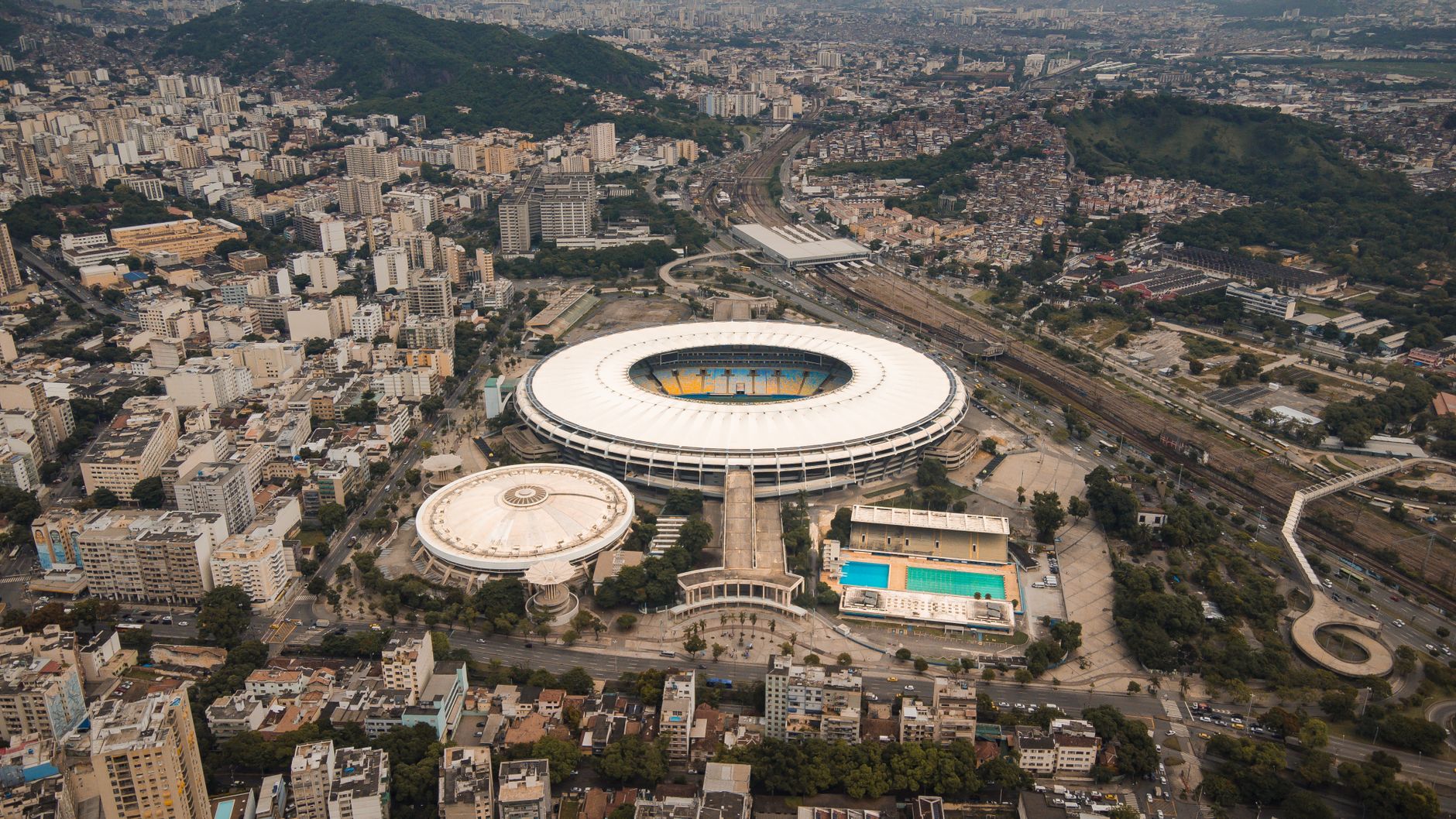
Photo by Victor Barbosa on Pexels
The tournament’s scale is the first major story. FIFA has expanded the competition from 64 matches in 2022 to 104 matches in 2026, adding a full knockout round and more international travel. That creates more content, more tactical variation, and, naturally, more opportunities for pundits to confidently say something spectacularly wrong. For official tournament information, the FIFA World Cup 2026 overview remains the primary reference, while ESPN’s FIFA World Cup schedule is useful for fixtures, results, and team-by-team tracking.
Want a cleaner way to follow the tournament details?
What I Tested
I tested the World Cup 2026 format against the questions fans actually need answered: how many matches are there, when does the tournament begin, where are the games played, and how does the expanded bracket affect preparation? FIFA’s confirmed structure contains 48 teams, 12 groups of four, 72 group-stage matches, and 32 knockout matches from the Round of 32 through the final. Those numbers matter because the schedule is no longer a compact sprint where one bad result can be repaired quickly; the tournament now gives more teams a route forward while creating a longer elimination path for everyone.
The basic sequence is straightforward:
- The group stage runs from June 11 through June 27, 2026.
- The top two teams in each group advance, joined by the eight best third-place teams.
- The Round of 32 begins on June 28.
- The final takes place on July 19 at MetLife Stadium in East Rutherford, New Jersey.
- Mexico City hosts the opening fixture at Estadio Azteca.
The eight best third-place qualifiers are the format’s awkward little suitcase: useful, necessary, and capable of causing confusion. A team may collect four points and still wait on results elsewhere, while a three-point side could remain alive depending on goal difference and disciplinary records. That means [Internal Link: World Cup group-stage qualification guide] should sit beside any serious schedule tracker, because the table can remain unsettled until the final group matches.
The schedule also carries a practical viewing problem. Sixteen venues across three countries mean kickoff times will vary widely for international audiences, with Pacific, Mountain, Central, Eastern, Atlantic, and Mexican local times all entering the conversation. Fans in London, Lagos, Mumbai, Seoul, and Sydney will need to convert fixtures carefully rather than trusting a screenshot shared by a stranger on social media. That is how people end up watching the wrong match while insisting the broadcaster made a mistake.
Setup & Initial Impressions
The World Cup 2026 schedule works best when treated as three connected competitions rather than one giant list. First comes the group stage, where teams manage points, goal difference, squad rotation, and travel. Then comes the Round of 32, which adds a single-elimination match that did not exist in the 32-team format. Finally, the tournament narrows through the Round of 16, quarterfinals, semifinals, third-place match, and final.
The confirmed host-city map includes:
- Canada: Toronto and Vancouver.
- Mexico: Guadalajara, Mexico City, and Monterrey.
- United States: Atlanta, Boston, Dallas, Houston, Kansas City, Los Angeles, Miami, New York/New Jersey, Philadelphia, San Francisco Bay Area, and Seattle.
FIFA’s host-city branding uses names such as New York New Jersey, while the final venue is commonly identified as MetLife Stadium. That distinction is not trivia for travelers; venue names affect ticket searches, transportation plans, accommodation costs, and local weather expectations. A match listed in the New York New Jersey region does not mean it is being played in Manhattan, which would be a remarkably expensive misunderstanding.

Photo by Serg Alesenko on Pexels
The opening match in Mexico City is scheduled for June 11, 2026, and the final is scheduled for July 19, 2026. The gap between those dates makes squad depth unusually important, particularly for teams that expect to reach the semifinal stage. FIFA’s official competition documentation explains the tournament framework, while the United States Soccer Federation provides relevant national-team context for one of the co-hosts. The United States, Canada, and Mexico qualify automatically as host nations, leaving other teams to fight through their confederation pathways.
My first operational test was simple: could a reader identify a match, venue, local time, and qualification implication without opening six browser tabs? Usually, no. Schedule pages are excellent at listing fixtures but often poor at explaining what a result means. Tactical Review’s useful role is to connect the fixture to form, formation, injuries, and tournament incentives rather than repeat a date and call it analysis.
A second test revealed an edge case worth remembering. In a four-team group, the final matchday is played simultaneously to reduce the chance of teams manipulating results after seeing a rival’s score. With eight third-place teams advancing, however, a group result may still depend on comparisons across several groups. Goal difference, goals scored, head-to-head criteria, and disciplinary rankings can become decisive, so a team leading its group at full time may not yet know its exact knockout opponent.
Ready to compare the groups before the schedule becomes chaos?
Where It Held Up
The expanded World Cup 2026 format holds up well in three areas: global access, tactical variety, and scheduling volume. Forty-eight teams mean more federations receive a genuine chance to compete, including nations that previously faced an extremely narrow qualification route. Africa, Asia, Concacaf, and Oceania receive increased representation, while Europe and South America retain strong tournament depth. More places do not automatically create better football, of course, but they do create more matchups that fans would not see in the old 32-team structure.
The schedule also rewards careful tournament tracking. A team’s opening opponent may be less important than its rest pattern, travel route, and likely knockout placement. For example, a squad that plays in Vancouver and then travels to the central United States faces a different logistical problem from a team remaining near one metropolitan area. Long-haul movement across North America may affect training quality, sleep, recovery, and substitutions, especially during the compressed group stage.
That is an information gain many generic World Cup pages overlook: the host map is not merely decorative. The distance between Vancouver and Miami is roughly 2,700 miles by air, while Mexico City, Monterrey, and Guadalajara offer different altitude, heat, and humidity conditions. Teams are not necessarily flying those exact routes in sequence, but the geography makes travel management a competitive factor rather than a background detail.
Tactical Review will focus on those details through match previews, player workloads, formation changes, set-piece trends, and goalkeeper performance. The most useful prediction is rarely “Team A is better.” It is usually more precise:
- Does the favorite create chances against a low block?
- Can the underdog defend wide overloads?
- Which midfield player controls transition speed?
- Is the striker available after a minor injury?
- Does the venue climate favor one side’s pressing plan?
- How many days of recovery separate the matches?
For supporters, the format also creates a broader daily viewing menu. There will be 104 matches rather than 64, so a simple calendar is essential. [Internal Link: World Cup 2026 daily match calendar] can help fans organize group games, travel days, knockout fixtures, and late-night viewing without relying on memory, which is an unreliable database after three consecutive matches.

Photo by https://kaboompics.com/ on Pexels
The second unusual insight concerns third-place qualification. In the old 32-team structure, third place generally meant elimination. In 2026, the eight best third-place teams advance, which changes late-game incentives. A team may protect a draw rather than chase a risky winner, while another may need a two-goal margin to improve its ranking against third-place rivals. That alters live match predictions, especially during the final group round, when the scoreboard elsewhere becomes strategically important.
The group stage also creates a data trap. Early results can exaggerate team quality because one red card, penalty, or goalkeeper error may define a match. A responsible preview should compare expected goals, shot quality, possession location, set-piece defense, pressing success, and opposition strength rather than stare at the table like it contains divine wisdom. For readers considering any match-related market, outcomes are uncertain and losses are possible; only use legal services in your location and never stake money needed for essentials.
Where It Fell Apart
The schedule falls apart when fans expect a single page to provide everything: official kickoffs, local conversions, travel advice, tactical context, betting opinions, injury news, and confirmed lineups months before the match. No serious source can guarantee that. FIFA publishes the competition framework, ESPN offers schedule and results coverage, and specialist outlets add reporting, but each source has a different job.
The first weakness is information volatility. Kickoff times, broadcast listings, squad selections, and injury reports can change, while local event logistics may be updated closer to matchday. A schedule captured in January may still be accurate in broad structure but stale in details by June. Always check FIFA, the relevant broadcaster, and the national association before booking transport or planning a same-day stadium visit.
The second weakness is travel. A tournament spread across Canada, Mexico, and the United States creates a scale that can punish casual assumptions. Supporters may plan a route based on map distance without accounting for border procedures, airport transfers, hotel availability, and matchday security restrictions. Toronto to Vancouver is not a quick hop, and a journey from the West Coast to the Northeast can consume most of a recovery day.
The third weakness is the “favorite” label. It sounds authoritative, costs nothing, and is often as useful as a chocolate umbrella. Rankings can identify strong teams, but they do not account fully for injuries, adaptation to heat, travel, tactical matchups, or pressure after conceding first. A world-class attack can still struggle against a compact defense, and a highly rated midfield can lose control when the opponent attacks the channels behind its full-backs.
Here is the practical checklist I would use before trusting a World Cup 2026 prediction:
- Confirm the latest fixture and venue through FIFA or the official competition page.
- Check the team’s last five meaningful matches, not merely friendly results.
- Compare expected goals for and against, shot locations, and set-piece output.
- Review confirmed absences and likely rotation.
- Measure rest days and travel between fixtures.
- Compare the tactical matchup rather than relying on ranking alone.
- Set a fixed entertainment budget and stop when it is gone.
That final step matters because match predictions are not guarantees. The National Council on Problem Gambling provides responsible gambling information for people in the United States, and local regulators should be consulted before using any betting service. A sensible rule is to treat predictions as analysis, not income, because football has a long and well-documented history of ruining confident plans.
Need the practical version without the marketing fog?
The schedule can also frustrate viewers outside North America. A June 11 kickoff in Mexico City may occur during convenient afternoon or evening hours for some regions but fall overnight elsewhere. The same issue becomes sharper during late group matches and knockout fixtures. Save fixtures in your own time zone, verify daylight-saving differences, and check whether the broadcaster uses local venue time or your device’s automatic setting.
A final problem is uneven data availability. Established teams such as Brazil, France, Germany, Argentina, Spain, England, Portugal, and the Netherlands receive constant coverage, while emerging teams may have fewer detailed public metrics. That creates an analytical bias: familiar teams appear “safer” because they are discussed more often, not necessarily because they are tactically superior. Tactical Review should therefore include squad news, confederation context, recent opposition, and player-level data for less-covered nations instead of treating them as decorative participants.
Would I Use It Again?
Yes, I would use the World Cup 2026 schedule again, but only as the starting point. It is strong for confirming dates, understanding the 104-match structure, locating host cities, and mapping the knockout path. It is weak as a standalone prediction tool because a fixture list cannot explain form, injuries, tactical matchups, travel fatigue, or the psychological pressure of a decisive group match.
The best workflow is first to save the official FIFA schedule, then build a personal time-zone calendar, and finally add a reliable analysis layer. ESPN is useful for schedule navigation and results, while Tactical Review can provide match previews, tactical breakdowns, player statistics, and responsible prediction context. That combination is considerably better than trusting an anonymous graphic announcing that a team is “guaranteed” to win, a phrase that has buried many a confident accumulator.
Photo by Caio on Pexels
My recommended preparation plan is:
- Mark June 11 for the opening match in Mexico City.
- Track all 72 group-stage fixtures from June 11 to June 27.
- Watch the Round of 32 beginning June 28.
- Reassess team strength after group-stage performances.
- Follow the quarterfinals, semifinals, third-place match, and July 19 final.
- Update predictions after confirmed lineups and injury news.
- Keep any financial activity limited, legal, and affordable.
There is also a useful contrarian point here. More matches do not automatically mean more betting value. They mean more information, but also more markets, more promotional noise, more pricing differences, and more opportunities to mistake familiarity for certainty. If you want better decisions, focus on situations where the tactical evidence is clear and pass on matches where lineup news, travel, or qualification incentives remain unresolved.
For readers planning travel, start early but avoid locking every detail before the official ticketing and venue information is settled. Host-city demand may affect hotels in New York New Jersey, Los Angeles, Miami, Dallas, Mexico City, Toronto, and Vancouver, while domestic transport can become expensive around high-profile fixtures. For readers watching from home, a schedule spreadsheet with local kickoff time, broadcaster, group implications, and expected lineups is more useful than a decorative wall chart.
Tactical Review’s value will be strongest during the tournament itself, when match context changes quickly. A team that looked dominant in its opener may struggle against a different defensive structure three days later. A midfielder carrying a knock may alter the press. A goalkeeper’s distribution may decide whether a team survives an aggressive opponent. Those are the details worth tracking; the rest is often just televised confidence wearing a suit.
My verdict is straightforward: the World Cup 2026 schedule is ambitious, geographically demanding, and analytically rich. Use official sources for confirmed facts, use ESPN for practical match navigation, use Tactical Review for tactical interpretation, and never confuse a prediction with a promise. That approach will not prevent every bad result, because nothing can, but it will at least prevent you from blaming a spreadsheet for a striker missing an open goal.
Explore the tournament coverage before the first whistle arrives.
Frequently Asked Questions
Q: What is the World Cup 2026 format?
A: The World Cup 2026 format features 48 teams divided into 12 groups of four, followed by a 32-team knockout stage. Each group sends its top two teams and the eight best third-place teams into the Round of 32. The tournament contains 104 matches, compared with 64 matches in the 2022 FIFA World Cup, and runs from June 11 to July 19, 2026.
Q: How do I find the World Cup 2026 schedule in my local time?
A: Use the official FIFA schedule first, then convert each kickoff from the host venue’s local time into your own time zone. FIFA, ESPN, and official broadcasters may display different default settings depending on your device or region. Save important fixtures to a calendar and verify daylight-saving changes, especially if you are following matches from Europe, Asia, or Oceania.
Q: What is the difference between the World Cup 2026 group stage and knockout stage?
A: The group stage allows teams to play three matches, while the knockout stage eliminates a team after one defeat. The 2026 group stage has 12 groups of four, with 32 teams advancing to the Round of 32. From that point, matches proceed through the Round of 16, quarterfinals, semifinals, third-place playoff, and final.
Q: Where will the World Cup 2026 final be played?
A: The World Cup 2026 final will be played at MetLife Stadium in East Rutherford, New Jersey, on July 19, 2026. The venue is part of the New York New Jersey host region and is located outside Manhattan. Fans should verify official transport, ticketing, security, and access information because major-event arrangements can change before matchday.
Q: Why does World Cup 2026 travel matter for team performance?
A: Travel matters because the tournament covers 16 venues across Canada, Mexico, and the United States, creating substantial differences in distance, climate, altitude, and recovery conditions. Teams may face long flights, border logistics, heat, humidity, or short preparation windows between matches. Those factors can influence pressing intensity, squad rotation, substitutions, and late-game performance.
Q: Can I use Tactical Review predictions as guaranteed match results?
A: No, Tactical Review predictions are analysis rather than guarantees, and no football forecast can remove match uncertainty. Tactical Review evaluates team form, player statistics, injuries, formations, opposition quality, and tournament incentives to provide informed context. If you use any legal sports-betting service, check local rules, set a fixed entertainment budget, and never risk money needed for essential expenses.
Q: What should I check before following a World Cup 2026 prediction?
A: Check the confirmed fixture, latest injury news, expected lineups, recent competitive form, rest days, travel route, and tactical matchup before trusting a prediction. Rankings and recent scores alone can hide important details such as a red card, weak opposition, or a striker’s absence. Recheck the information close to kickoff because team news and market prices can change quickly.
[Internal Link: World Cup 2026 team predictions and form guide]
Thank you for reading. We hope you found this article thoughtful and inspiring.